
Selected work
Before Soft Power Fabrique, the same way of working was tested with governments, international cooperation agencies, financial institutions and communities. Three interventions, each told from the situation to what it made possible.
What did a truck have to do with protecting fish?
- The situation
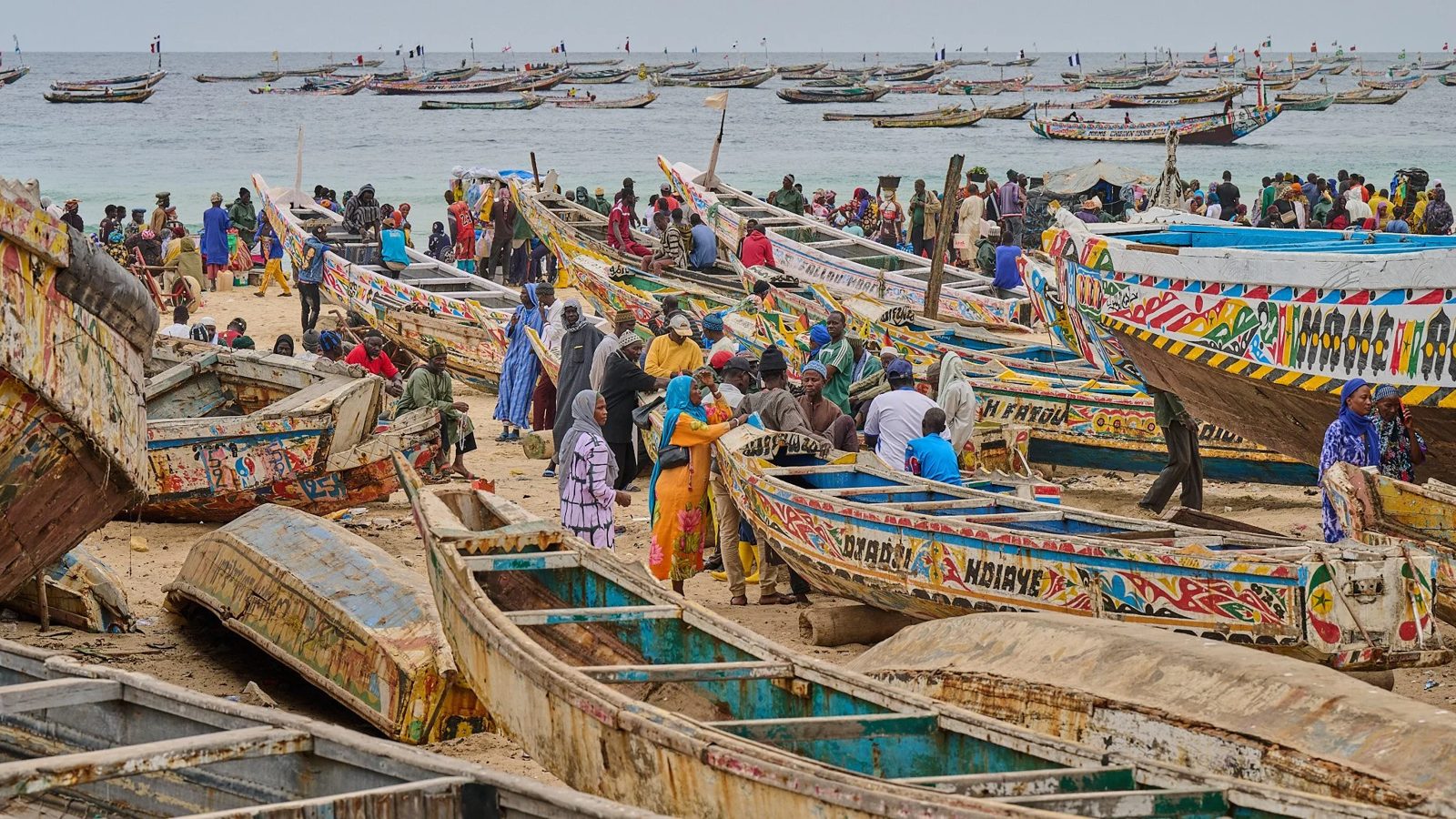
Senegal needed to protect declining fish stocks. Its 1998 Fisheries Code provided for Local Artisanal Fisheries Councils (CLPAs), through which fishing communities could participate in managing the resource.
But restricting access to fishing meant more than reducing pressure on fish stocks. It also meant changing who could earn a living, invest and participate in the local economy.
- What she saw
The government and donors were concerned about declining fish stocks. But field surveys revealed a different priority among fishermen: their livelihoods. As more people entered the sector, fishermen feared losing their income and their ability to make a living from fishing.
Isabelle Antunès recognised that protecting fishermen’s livelihoods would be a more effective starting point for engaging them in resource management. She advised presenting the CLPAs as a means of protecting their income, rather than simply protecting fish stocks.
But protecting livelihoods required more than regulating access to fishing. Communities were connected through debts, commercial relationships, family obligations and competing economic activities. Granting fishing rights to some while excluding others could undermine the legitimacy of those rights and generate new conflicts.
She therefore advocated an approach combining entrepreneurial capacity building with negotiation between economic actors. Strengthening fishermen’s businesses and creating opportunities across sectors could give communities an economic interest in managing their resources.
Conservation remained the objective. Protecting livelihoods became the starting point.
- What was done
Working with Senegal’s Directorate of Marine Fisheries through French development cooperation, Isabelle Antunès contributed to the design and piloting of the CLPA approach.
Three pilot councils were established in 2005, in Joal, Sindia and Foundiougne. She subsequently led the support process in Joal and Foundiougne, where members negotiated their roles, decision-making arrangements and initial action plans.
- In Joal, an unexpected proposal emerged
Fishing and livestock farming were closely connected. When times were hard, herders could turn to fishing, adding pressure to already declining fish stocks. Meanwhile, fishermen were considering investments in livestock, potentially competing with herders.
Through discussions, the different actors began to see how negotiation could benefit both sides. Rather than simply restricting access to fishing, they explored how economic opportunities could give each group a reason to respect the other’s interests.
Local elders proposed a different arrangement: instead of investing in livestock and competing with herders, fishermen would invest in trucks and milking machines that herders could rent in exchange for respecting the fishing restrictions.
- What it made possible
The CLPA model was subsequently extended along Senegal’s coast, with 22 councils established by 2011 and 27 reported by 2022.
The pilots showed that fisheries management could become an entry point for wider economic negotiations, connecting resource protection with livelihoods, investment and opportunities beyond fishing.
- What remained to be done
In her unpublished 2007 working papers, Isabelle Antunès argued that the councils’ long-term effectiveness depended on strengthening their economic foundations: reducing indebtedness, improving bargaining power, developing entrepreneurship and creating opportunities beyond fishing.
These dimensions required further technical and financial support. Later evaluations identified persistent weaknesses in the councils’ financial autonomy and organisational capacity.
The proposed investments in Joal were not documented as having been implemented.
- The insight
Resource management becomes more viable when those involved can see an economic future in making it work.
What if the problem wasn’t the borrower, but the bank’s business model?
- The situation
During the COVID-19 pandemic, UNESCO raised concerns about artists whose livelihoods had been disrupted. For many independent musicians in Cameroon, economic insecurity was nothing new.
They created and performed music, but their earnings were irregular, their investments difficult to finance and their access to banks limited. To produce and distribute their work, they often depended on family, sponsors, grants or intermediaries.
For banks, irregular income meant risk. For artists, limited access to finance made it harder to produce, sell and earn from their work.
- What she saw
Isabelle Antunès questioned an assumption built into conventional banking: that customers should fit financial products designed for predictable earnings.
Musicians were not necessarily unbankable. Their economic activity followed a different rhythm, like that of traders, farmers, artisans and many independent entrepreneurs.
What if banks adapted their services to the economic lives of their customers, instead of the other way round?
This required more than offering loans. Bankers needed to understand how artists earned money, assess their cash flows and finance productive activities according to their repayment capacity. Artists needed the entrepreneurial skills and financial services to manage irregular earnings, invest and progressively build financial independence.
For financial institutions, this was also a market they had yet to serve.
Music offered a way to demonstrate the opportunity. Financing an artist could set a whole value chain to work, from recording studios and producers to designers, photographers and digital distributors. And income generated through music could support investment in other small businesses.
- What was done
Following a conversation with the Director of UNESCO’s regional office in Yaoundé about artists’ economic vulnerability during the pandemic, Isabelle Antunès conceived and led the implementation of Cuhlia as Country Director of DSIK, with funding from German development cooperation.
The initiative brought together DSIK, La Régionale d’Épargne et de Crédit, UNESCO and music-industry professionals. UNESCO contributed to the selection of participating artists.
The pilot connected financial services, entrepreneurial capabilities, music production and market access.
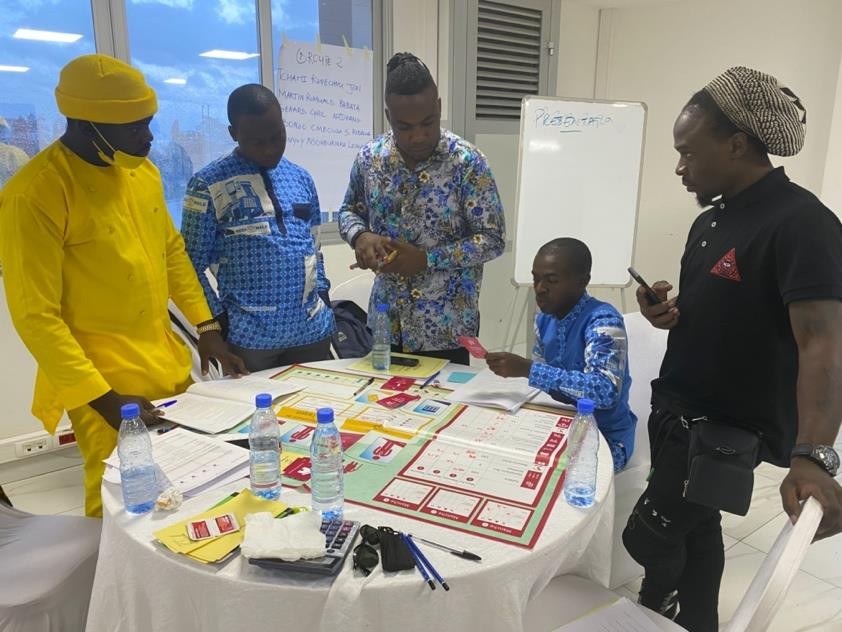
Capability. Artists, managers and bank advisers trained together through DSIK’s Business Games and complementary sessions on savings, micro-business, copyright and digital marketing. Artists learned to manage their careers as businesses. Bankers learned to understand the economic activities and repayment capacities of clients with irregular incomes.
Finance. DSIK worked with La Régionale to build financing around the client’s economic activity rather than around standard products. Drawing on Isabelle Antunès’ personal experience of living with irregular income, together they developed Pack Progrès, turning the conventional approach to savings on its head.
Instead of saving whatever remains after paying monthly expenses, clients put their earnings into a savings account that serves as a reservoir. From there, a regular amount is transferred each month into a current account to cover everyday needs. This allows people with irregular earnings to organise a regular income for themselves, while accessing loans for productive investments, with repayments adapted to their financial capacity and economic activity.
Production. Five recording studios were accredited. When an artist took out a loan, they brought the studio’s invoice to the bank, which paid the studio directly from the amount borrowed. Financing music production therefore also generated business for other professionals in the sector.
Market. Artists received support to record and distribute their music through digital platforms, allowing them to reach audiences and earn streaming royalties. The initiative also encouraged them to develop complementary income-generating activities to sustain their artistic careers.
Visibility. Didier Awadi produced Cuhlia, a collective song performed by twenty Cameroonian artists, and Mr Leo joined the programme. A dedicated website and digital communications helped introduce the artists and their music to wider audiences.
- What it made possible
Nineteen artists released their music on digital platforms. Fifteen obtained loans: thirteen for music production, one for a tour and one for a restaurant.
One artist repaid his loan within six months, then invested in T-shirts to sell. Another invested his savings in poultry farming, alongside his music and voice-coaching activities.
Through DSIK’s support, La Régionale launched Pack Progrès, then began offering it on a trial basis to artisans and other small entrepreneurs in the informal sector.
The experience showed that musicians could be served through adapted financial services, entrepreneurial training and access to markets. Its wider aim was to encourage financial institutions to apply similar approaches to other professions and sectors they struggled to serve.
- In parallel
As Country Director of DSIK, Isabelle Antunès also mobilised around fifteen international experts and organised workshops contributing to the Ministry of Finance’s strategic framework for strengthening the stability of Cameroon’s microfinance sector.
- The insight
Financial inclusion is not only about bringing people into the existing system. It is also about redesigning financial services so that institutions can recognise, finance and grow with the economic activities people have already built.

A film that could change how a community sees itself
- The situation
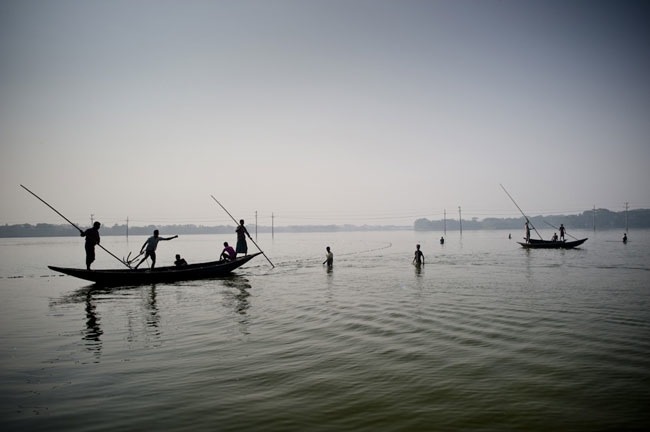
Bangladesh is often portrayed as a country at the mercy of floods. Yet in Daudkandi, with the support of the local NGO SHISUK, farmers had pooled their resources to turn months of submerged land into fisheries, and built businesses around a season that had once interrupted their livelihoods.
They had combined what was already there in a new way: land, water, knowledge, the ability to organise, and savings that were meagre on their own but, pooled among many, enough to begin.
- What she saw
The rain itself had become a resource.
Beneath the floodwater, a new economy had taken shape. Villagers had become shareholders, negotiated who owned what, and turned months of waiting into months of work, with new businesses and jobs along the way.
But as the fisheries grew more profitable, commercial interests began to compete with the needs of farmers and smaller shareholders. Decisions on water, production and profits increasingly determined who benefited and who bore the costs.
The initiative had transformed the local economy. Now its own success was transforming the relationships on which it depended.
- What was done
Isabelle Antunès wrote and directed Happy Rain to tell how the project emerged and grew without the external funding initially sought. Rather than portraying an uncomplicated success story, the film also examines the tensions that accompanied growth: rice against fish, the concentration of economic power, and the place of smaller shareholders.
- What it made possible
The film was conceived as a way for the community to see its own experience from another perspective and reflect on what might come next.
Bangladeshi audiences welcomed an image of their country they rarely saw: realistic and inventive, far from the usual pictures of catastrophe.
This was soft power at work: making a community’s ingenuity visible, intelligible and capable of inspiring new choices.
- Recognition
Happy Rain was screened at COP21 in Paris in 2015, broadcast during COP24 in 2018, and received two awards in 2016: the Prize of the Slovak Chamber of Commerce and Industry at Ekotopfilm–Envirofilm and an Award of Recognition at the International Open Film Festival.
- The insight
When life is hard, people can build together what none of them could build alone. Success can make them forget what brought them together.
Soft Power Fabrique brings this practice to new situations.